
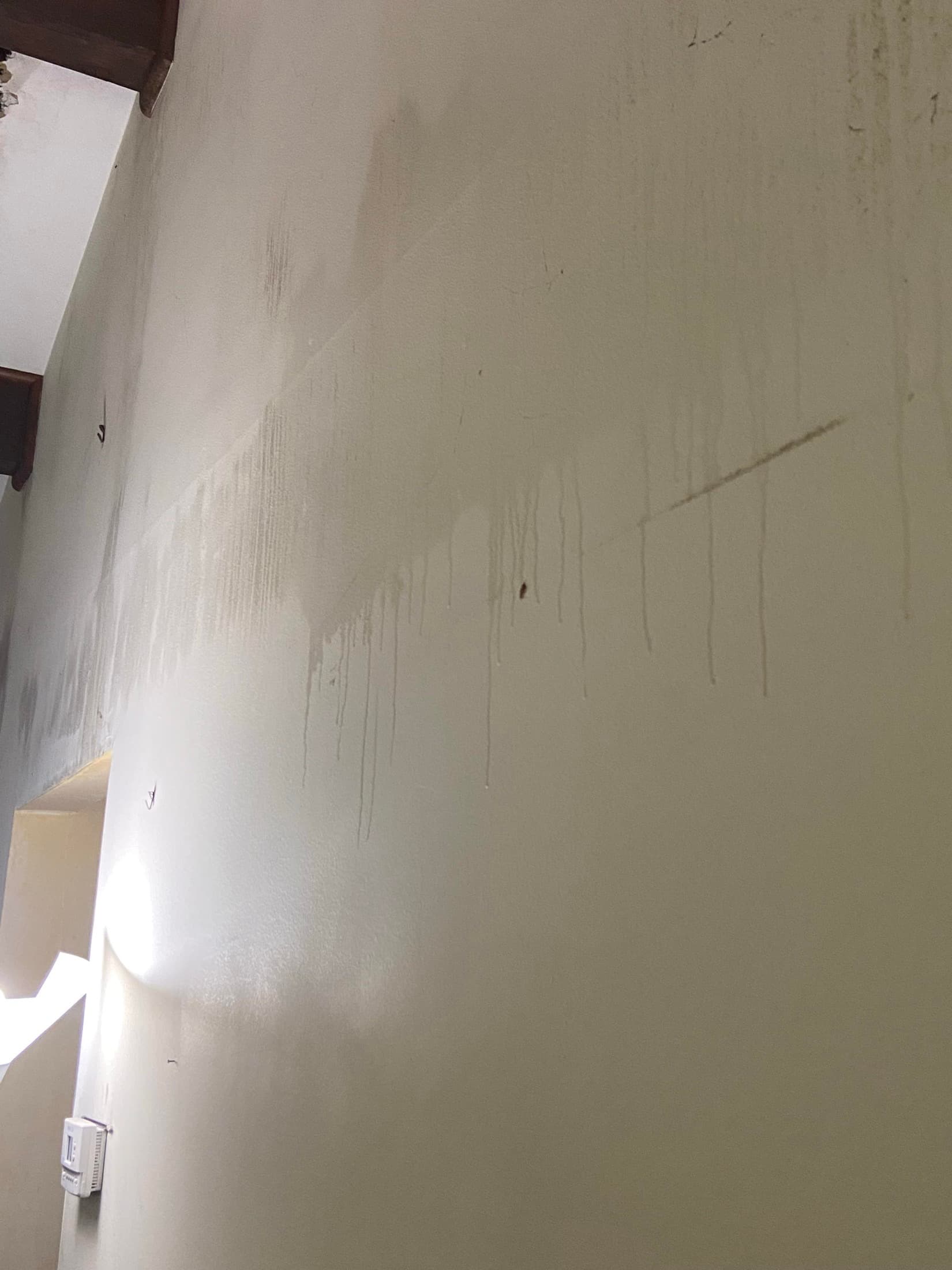
Most New Hampshire landlords have heard “you have 14 days.” Fewer know where the number comes from, what happens at the end of it, or that it is not really a deadline to fix mold. It is a defense a tenant can raise when a landlord brings an eviction case for unpaid rent. Understanding the difference changes how you should run the first two weeks after a complaint.
General information, not legal advice. NERD is a remediation contractor, not a law firm, and nothing here creates an attorney-client relationship. Statutes are summarized as of October 2026 from the text of RSA 540:13-d. For how the law applies to your property and your facts, talk to a licensed attorney.
Where the 14 days comes from
RSA 540:13-d says that no action for possession based on nonpayment of rent can be maintained where the premises are in substantial violation of health and safety standards that materially affects habitability — if the tenant proves four things, by clear and convincing evidence:
- The tenant was not in arrears and gave written notice of the violation to the person they customarily pay rent to.
- The landlord failed to fix it within 14 days of receiving that written notice — or, in an emergency, as promptly as conditions require.
- The tenant, their family, and anyone on the premises with their consent did not cause the violation.
- Repairs were not prevented by extreme weather or by the tenant failing to give reasonable access.
What happens in court
If the defense is raised, the court may continue the case for up to a month so the landlord can fix the problem. The tenant pays the withheld rent, and rent coming due, into court. If the violation is corrected in that window, the case is dismissed and the money is divided — the landlord receives the fair rental value for the period the problem existed, and the tenant receives damages for the breach of the warranty of habitability. If it is not corrected, the court enters judgment for the tenant and returns the deposited money.
In other words, the 14 days is not a countdown to a penalty. It is the point after which a tenant's defense becomes available — and it is measured from when you received written notice, so the date you got it matters.
“As promptly as conditions require”
That phrase is the part landlords underestimate. For an active leak, sewage, or fast-spreading growth, fourteen days is the outer edge, not the target. A court looking at a unit with a ceiling that has been dripping for twelve days is unlikely to be impressed that you were inside the window.
Mold is not named, so what is the standard?
We are not aware of a New Hampshire landlord statute that addresses mold by name. Maine's new law does. In New Hampshire, mold complaints arise under the implied warranty of habitability (recognized by the state Supreme Court in Kline v. Burns, 1971), the housing standards in RSA chapter 48-A, and local housing codes. The hook is “substantial violation of health and safety standards that materially affects habitability,” and local code officials can weigh in on whether a condition meets it.
A file that holds up
- 1Date-stamp the receipt of every written complaint, and put day 14 on a calendar the same day.
- 2Acknowledge in writing within 24 hours and say what you will do next.
- 3Inspect within 48 to 72 hours with photographs and moisture readings.
- 4Find and stop the water source before anything else.
- 5Keep the scope of work, invoices, and before-and-after readings for the remediation.
- 6If something delays you — a supplier, weather, a tenant who will not give access — write it down when it happens. Those are the circumstances the statute itself recognizes.
- 7Close the loop in writing and keep the file well past the end of the tenancy.
A realistic timeline
- Day 0: complaint received — log it and acknowledge it in writing.
- Days 1 to 3: inspect, photograph, take readings, and stop any active water.
- Days 3 to 7: remediation scheduled or underway, with interim drying.
- By day 14: condition corrected, or professionally in hand with documentation of why any remaining work is still underway.
- After: written closure to the tenant, and file everything.
Where remediation fits
A remediation contractor handles the physical fix and the record of it — source, containment, removal, drying, and before-and-after readings. Mold sampling and clearance testing are the work of an independent certified assessor, which is also what gives a result credibility if the case is contested.
Rentals in Maine too? Maine's mold law took effect on July 29, 2026 and works differently — it names mold directly and sends tenants to court rather than to a rent defense.
Maine's 2026 Mold Law →We work with landlords and property managers across the New Hampshire Seacoast, documenting every job with readings you keep for your file.
For Property Managers →